Field Environments
Six environments.
One thread.
Browser-native WebGL
No app required
Mobile + desktop · WebXR-ready
No app required
Mobile + desktop · WebXR-ready

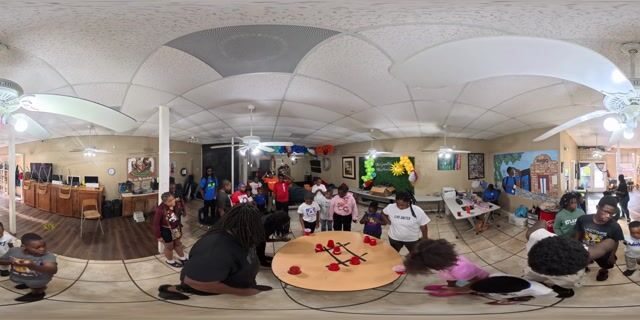
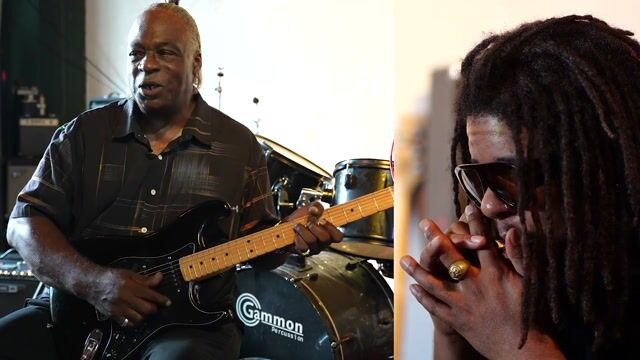
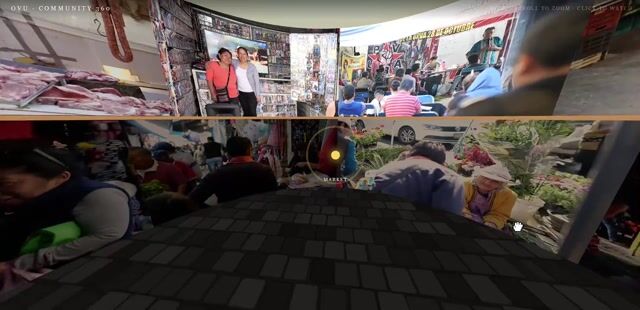
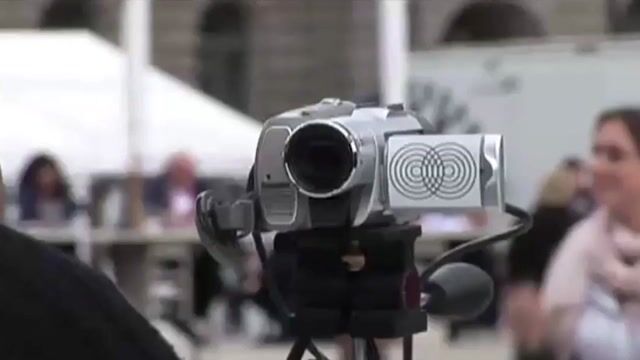
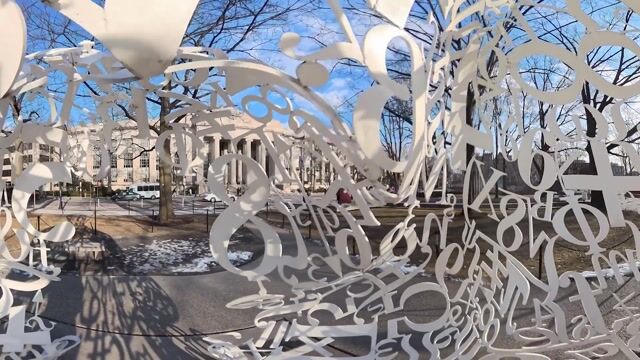
We build environments where place speaks for itself — 360° archives that hold what communities already know, before someone else maps it for them.
"This is not documentation. This is the recovery of knowledge that has always lived in place — and was never meant to be extracted from it."
Real communities. Real moments. Captured in 360° and layered with the voices that made the space meaningful. Evidence, not simulation.
Every environment is a claim — this place exists, this knowledge was here, this community authored its own spatial record before someone else did it for them.
Asili™ maps how communities construct meaning — the cognitive fingerprint underneath what people say. That's different from recording words.
Not keyword extraction. Not sentiment scoring. Asili maps how communities construct meaning — the cognitive fingerprint across ten dimensions. Each voice becomes a coordinate. Thousands of coordinates become a map no other tool can draw.
Communities under similar pressures develop convergent intelligence. Clarksdale and Parramore are dimensionally the same argument. Asili surfaces the connection.
Real-captured space. You are inside it, not observing it. The camera position, the moment, the voices layered on — community authorship of place. Evidence, not simulation.
A moment in Clarksdale connects to a voice from Berlin. Same reasoning mode, different geography, different century. Mirror Theory made visible in real time.
Every environment is a stake in the ground. Timestamped, geolocated, community-authored. The mirror world cannot overwrite what was planted first.
The architecture is the same. What changes is context — and who's at the table.
Built with communities, not for them. Parramore, Clarksdale, Puebla, Berlin. Environments that hold what was already known — before redevelopment, displacement, or someone else's platform claims it.
The spatial web is being claimed by Apple, Google, and Meta. We build community-owned spatial environments before the territory closes — data sovereign, browser-native, community-controlled.
360° environments as primary-source educational space. History, civics, cultural geography — archived moments layered with dimensional analysis and community voice.
Community-authored spatial experiences for visitors — not the sanitized version. Museums, cultural institutions, tourism boards. Experience a place from the inside before you arrive.
A new form — dimensional, archived, navigable, living. The viewer moves through the story. Asili surfaces analysis in real time. The narrative is spatial, not linear.
Asili-style dimensional fingerprinting applied to long-form testimony corpora. Wrongful conviction files. The pattern visible in meaning-making structure that keyword search will never find.
You can protect tribal enrollment data, community health records, financial information — and still lose. Because if the 360° representation of a Native community's land, story, and spatial knowledge is owned by Meta or Google, the sovereignty question hasn't been solved. It's just been shifted to a layer you didn't defend.
A parallel digital world is being built right now — by Apple, Google, Meta, and others — whether communities participate or not. The question is not whether your community will have a spatial presence. The question is who authors it.
Read: The Next Land Grab →Physical presence without perceptual presence in shared space. People occupying the same geography, participating in the same institutions — and not actually seeing each other. The condition our spatial environments are designed to interrupt.
Communities under similar structural constraints develop convergent intelligence — not by accident. The blues from Clarksdale and the organizing logic from Parramore are, dimensionally, the same argument. Asili surfaces the isomorphism.
The questions people carry — especially the ones they don't ask out loud — are more revealing than the answers they give. Asili surfaces the question underneath. Our Voices Unbound asks: what question do you hold that the world doesn't see?
Spatial computing companies are mapping every street and building to create the infrastructure of the spatial web — communities have no seat at that table. We build the counter-infrastructure: community-authored, community-owned, planted before the territory closes.
We work with museums, filmmakers, communities, researchers, and anyone building at the intersection of place, voice, and memory. If the work connects to yours, reach out.